
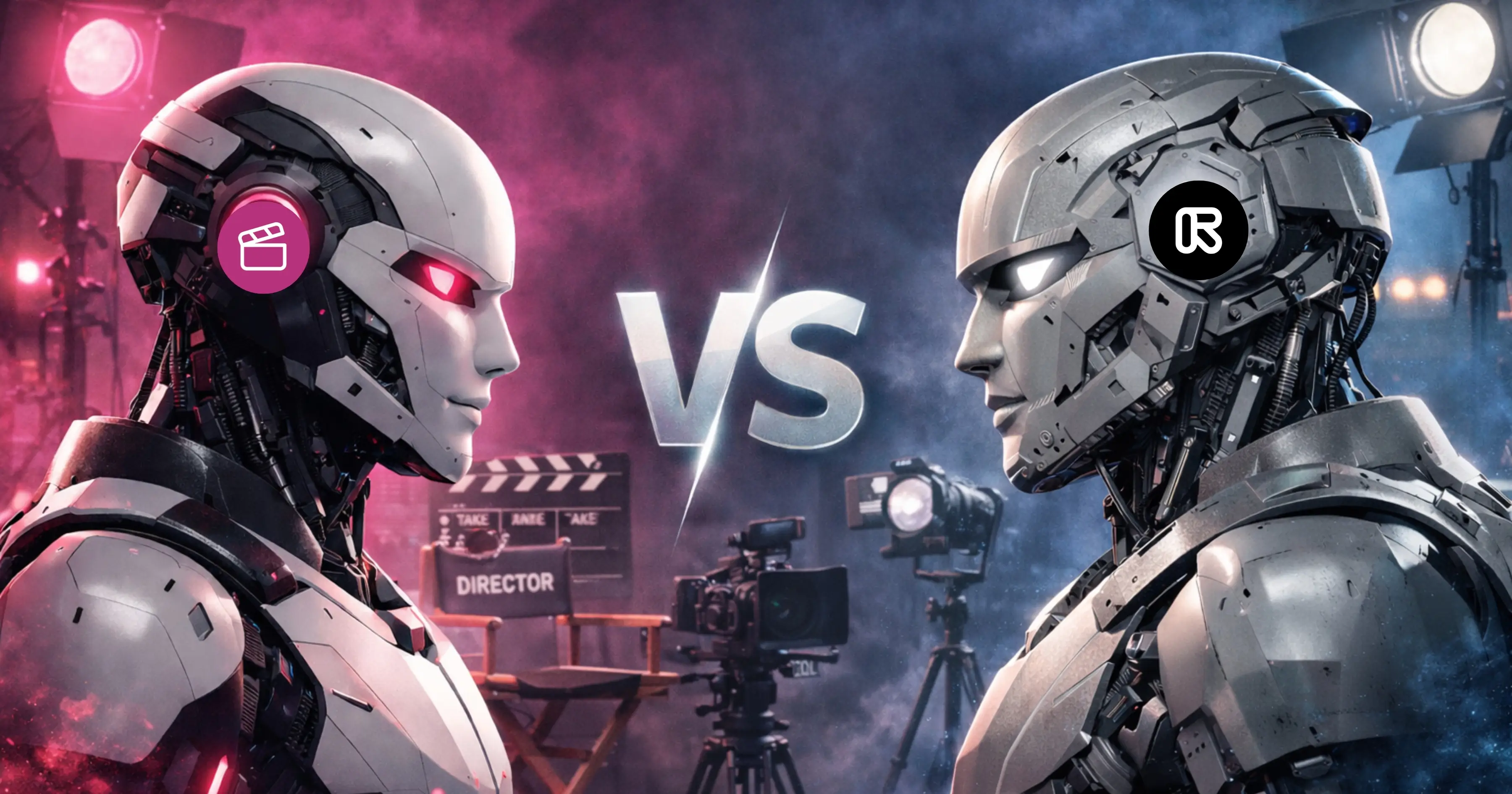
Motion vs Runway: AI Video for Filmmakers Compared (2026)

Runway is the most widely recommended AI video tool in 2026. Its generation quality is excellent, its features are mature, and it has become the default choice for creators who want impressive individual clips. Motion is newer and built differently: it focuses on multi-scene consistency and directorial control rather than single-clip quality.
They are not direct substitutes. Understanding where each tool excels tells you which one belongs in your workflow, and whether you need both.
The Core Difference
Runway is a generation engine. It produces outstanding individual clips. It supports image-to-video, video-to-video, and its Act-One feature maps your physical performance onto an AI character. Each generation is powerful and high-quality. The challenge: Runway has no persistent project memory. Every scene is a fresh start, which means maintaining character consistency across multiple scenes requires manual reference management.
Motion is a director platform. It manages a creative world across multiple scenes. You define your characters and visual style once, and every generation within that project inherits those definitions automatically. Motion does not try to compete with Runway on per-clip quality. It competes on what Runway cannot do: effortless multi-scene consistency.
Character Consistency
This is where the tools diverge most significantly.
Runway's Character Reference feature lets you upload an image to anchor a character's appearance for a single generation. To maintain consistency across a 10-scene project, you repeat that process 10 times. Even with identical reference images, drift still occurs as Runway does not retain memory between sessions.
Motion handles this at the project level. The character is defined once and locked. Scene 1 and Scene 10 use the same identity automatically. There is no reference upload workflow to manage per scene.
For a short film or brand video with recurring characters, Motion's approach saves significant time and produces more consistent results at scale.
Output Quality
Runway Gen-4.5 produces some of the best individual clip quality available. Its temporal consistency (smooth motion within a clip), cinematic rendering, and performance fidelity via Act-One are difficult to match. For a single scene where quality is the priority, Runway is the benchmark.
Motion directs leading generation models rather than running its own. The output quality depends on the underlying model being used. The advantage is that Motion can integrate improvements from multiple models over time. The tradeoff is that per-clip quality may not match what Runway produces with its own proprietary model at its peak.
Ease of Use
Runway is well-documented and has a large community of tutorials. Its interface is polished and most features are accessible without deep technical knowledge. Getting a high-quality clip out of Runway in your first session is entirely achievable.
Motion is designed to be simple from the start. The project-based structure is intuitive: create a project, define your world, generate scenes. Users new to AI filmmaking can get their first consistent multi-scene output faster with Motion than they could manually replicate that consistency in Runway.
Side-by-Side Comparison
| Feature | Motion | Runway Gen-4.5 |
|---|---|---|
| Character consistency | Automatic across all scenes | Manual reference per generation |
| Per-clip quality | Good (model-dependent) | Excellent (proprietary model) |
| Performance mapping | No | Yes (Act-One) |
| Multi-scene project structure | Yes | No |
| Ease of use | High | Medium-High |
| Best for | Multi-scene consistency at scale | High-quality individual scenes |
| Access | Early access | Available |
Do You Need Both?
For many filmmakers, yes. A common workflow in 2026 is to use Motion for project structure and consistency management, then use Runway as the generation engine for scenes where maximum clip quality matters. The tools complement rather than compete with each other.
If you can only choose one: choose based on your primary need. If you are making a multi-scene film and consistency is the challenge, start with Motion. If you need the best possible quality for individual cinematic shots, start with Runway.
Frequently Asked Questions
Is Motion a good Runway alternative?
Motion is a strong alternative for filmmakers whose main challenge is multi-scene consistency. It handles character persistence automatically across a project, which requires significant manual effort in Runway. For single-clip generation quality, Runway remains the benchmark. The two tools serve different primary needs.
Can Motion match Runway's video quality?
Motion directs leading generation models to produce video rather than running its own proprietary model. Output quality is strong and improves as underlying models improve. For raw per-clip cinematic quality, Runway Gen-4.5's proprietary model currently sets a high benchmark. For multi-scene projects, the consistency advantage of Motion often outweighs a marginal quality difference on individual clips.
Which is better for keeping the same character across scenes: Motion or Runway?
Motion. Character consistency across multiple scenes is the core problem Motion was built to solve. Runway's Character Reference feature works well for individual generations but requires manual re-application for every scene and still produces some drift over longer projects. Motion handles this at the project level automatically.
Does Runway have a project-based workflow like Motion?
Runway organises content into projects for file management, but does not maintain persistent character or world definitions across generations. Each new generation in Runway starts without memory of previous outputs. Motion's project structure is fundamentally different: creative definitions made at the project level are inherited by every generation within it.
What is Motion AI and how is it different from Runway?
Motion is an AI Director platform by Vertical Studio, built for multi-scene filmmaking with automatic character consistency. Runway is an AI video generation engine known for high output quality and features like Act-One performance mapping. The key difference: Motion manages creative consistency across an entire project, while Runway optimises each individual clip. They are best understood as complementary tools for different parts of the filmmaking workflow.